


LEMAIRE
From admiration to ownership.
Consumer Psychology · Brand Strategy · Digital Experience
The distance between desire and purpose.
Lemaire had become one of the most respected names in contemporary luxury fashion, with exceptional cultural relevance and a highly recognizable accessory business.
While products like the Croissant bag had achieved cult status, the ready-to-wear collections were not converting online with the same momentum.
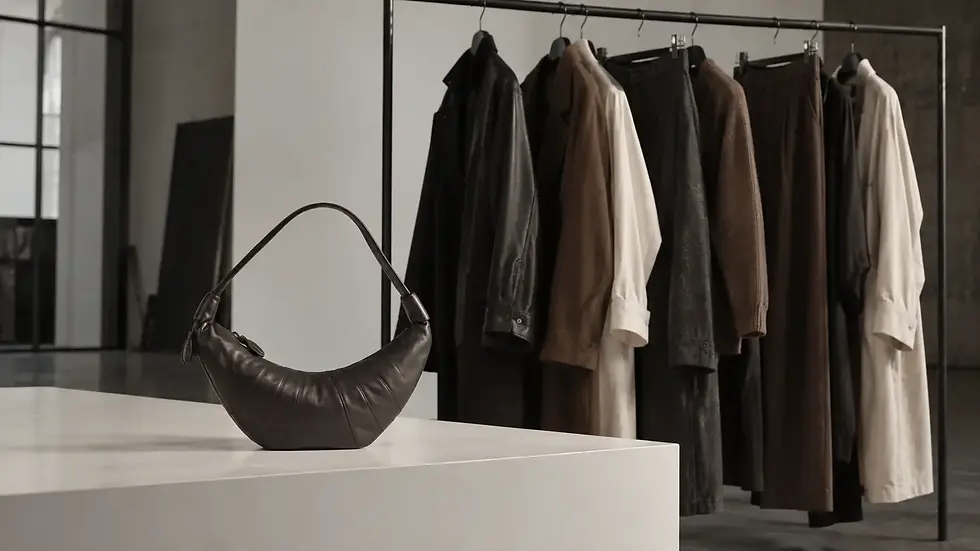

Admired. Desired.
But not always chosen.

The Challenge
1
Why were customers comfortable investing in Lemaire accessories,
but hesitated when purchasing ready-to-wear?
2
At which stage of the buying journey did customers lose confidence?
2
3
Was the issue product desirability, or the way the products were being communicated online?
4
How could conversion improve without making the brand louder, more commercial or less authentic?
4
The question was why desire wasn't consistently becoming ownership.


What hesitation
sounded like.
And which psychological barriers prevented admiration from becoming purchase intent.
Before changing the way Lemaire was presented, we wanted to understand the moment admiration became uncertainty.
Across customer conversations, reviews, fashion communities and the wider language surrounding the brand, a pattern emerged. People were not questioning the quality of the clothes. They were questioning their own relationship to them. The hesitation was less “Do I want this?” and more: “Can I see myself wearing it?”

“I love looking at Lemaire more than I actually buy Lemaire.”
“I'd probably buy more if I could actually see complete outfits.”
“The clothes are beautiful but also… very bland. I worry I'll just look like I'm wearing oversized basics.”
“The croissant bag just makes sense almost immediately. I don't know about the clothes though. ”
"I've had the same trousers bookmarked for months.."
“The clothes could be so much easier to imagine if they showed someone walking in them.”
"I wish they showed real people styling it, instead of just campaign shots."
01 — Identity uncertainty
02 — Purchase hesitation
03 — Visualization gap
04 — Emotional admiration
05 — Need for styling guidance
The emerging behavioral patterns behind the purchase.
The customer questions if the experimental silhouette aligns with their established personal identity, creating a distance between admiration and ownership.
A specific moment of friction at the point of intent where the lack of tactile reassurance outweighs the visual desire for the garment.
Difficulty in translating campaign imagery into lived context, preventing the customer from seeing the piece within their daily environment.
The brand is experienced as high art—admired deeply for its aesthetic but kept at an untouchable distance, never bridging into utility.
The complexity of Lemaire proportions creates a need for prescriptive styling to ensure the garment translates effectively in a total look.
THE BEHAVIOURAL DIAGNOSIS
The problem was narrative accesibility.

Customers understood the beauty of the individual object. What was less immediate was the system around it: how a coat moved, how a trouser shaped a silhouette, how one piece related to another, and how the wardrobe might translate into their own lives.
Ready-to-wear therefore required more than desire. It required self-recognition.
THE STRATEGIC SHIFT
From product discovery to wardrobe discovery.


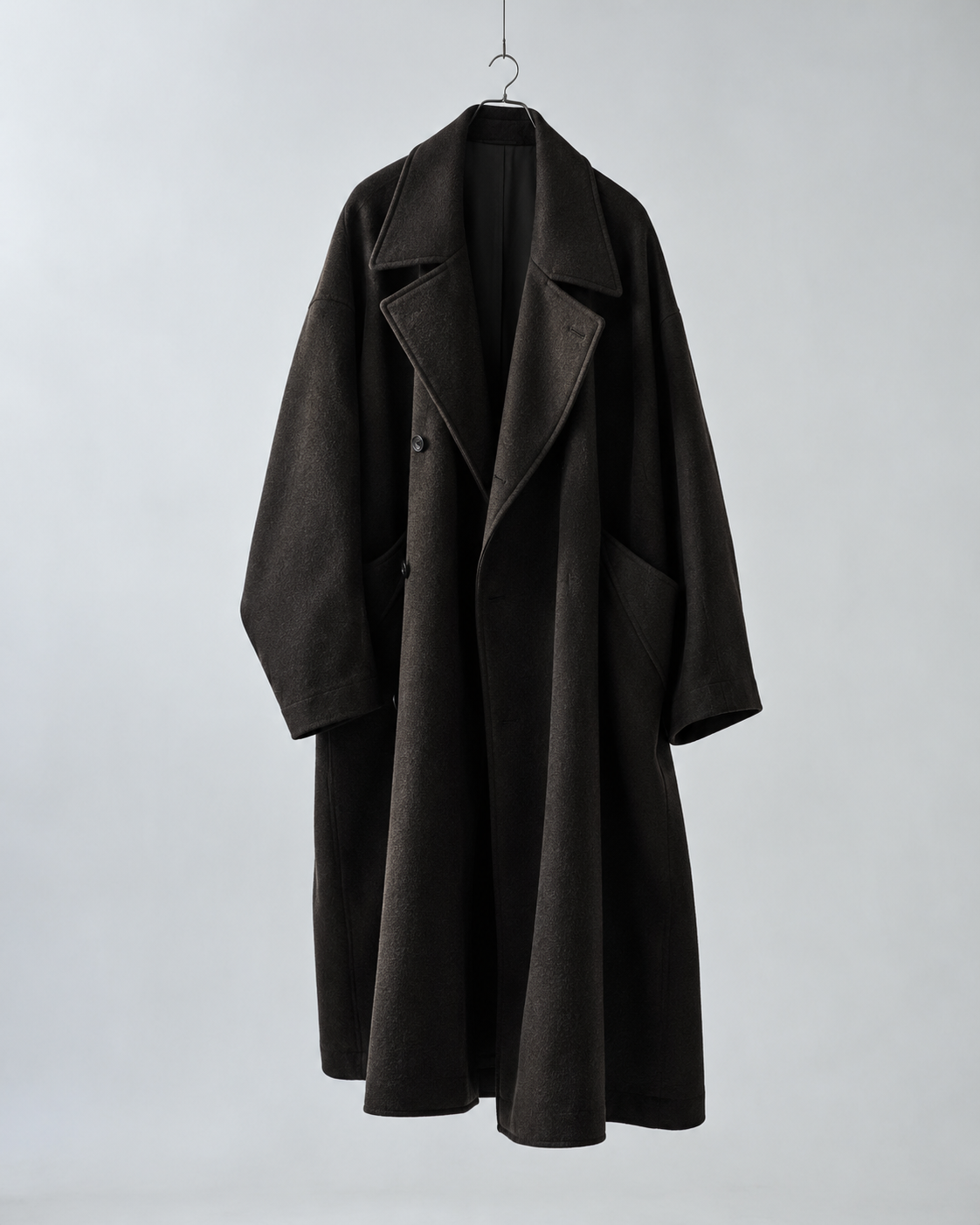
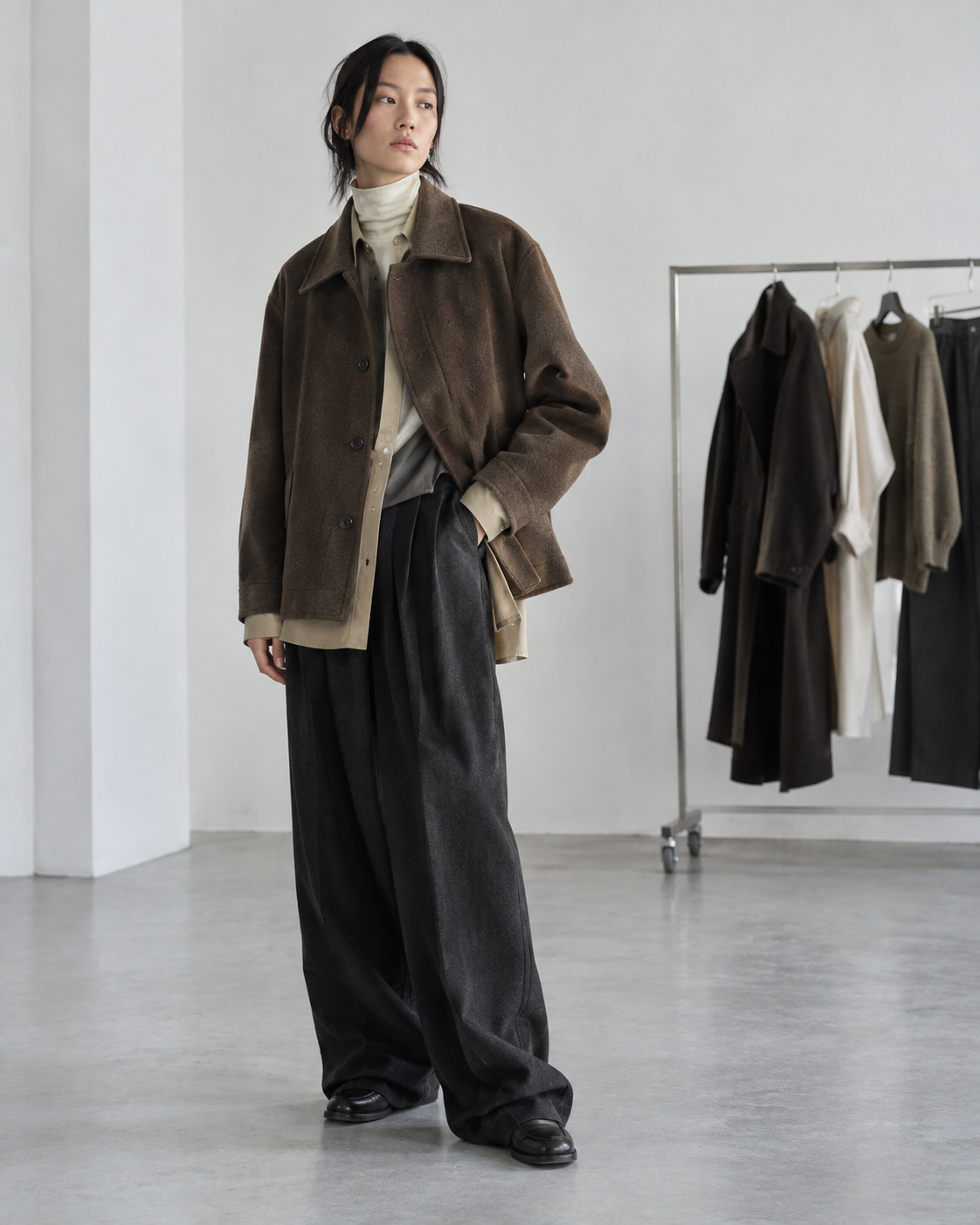
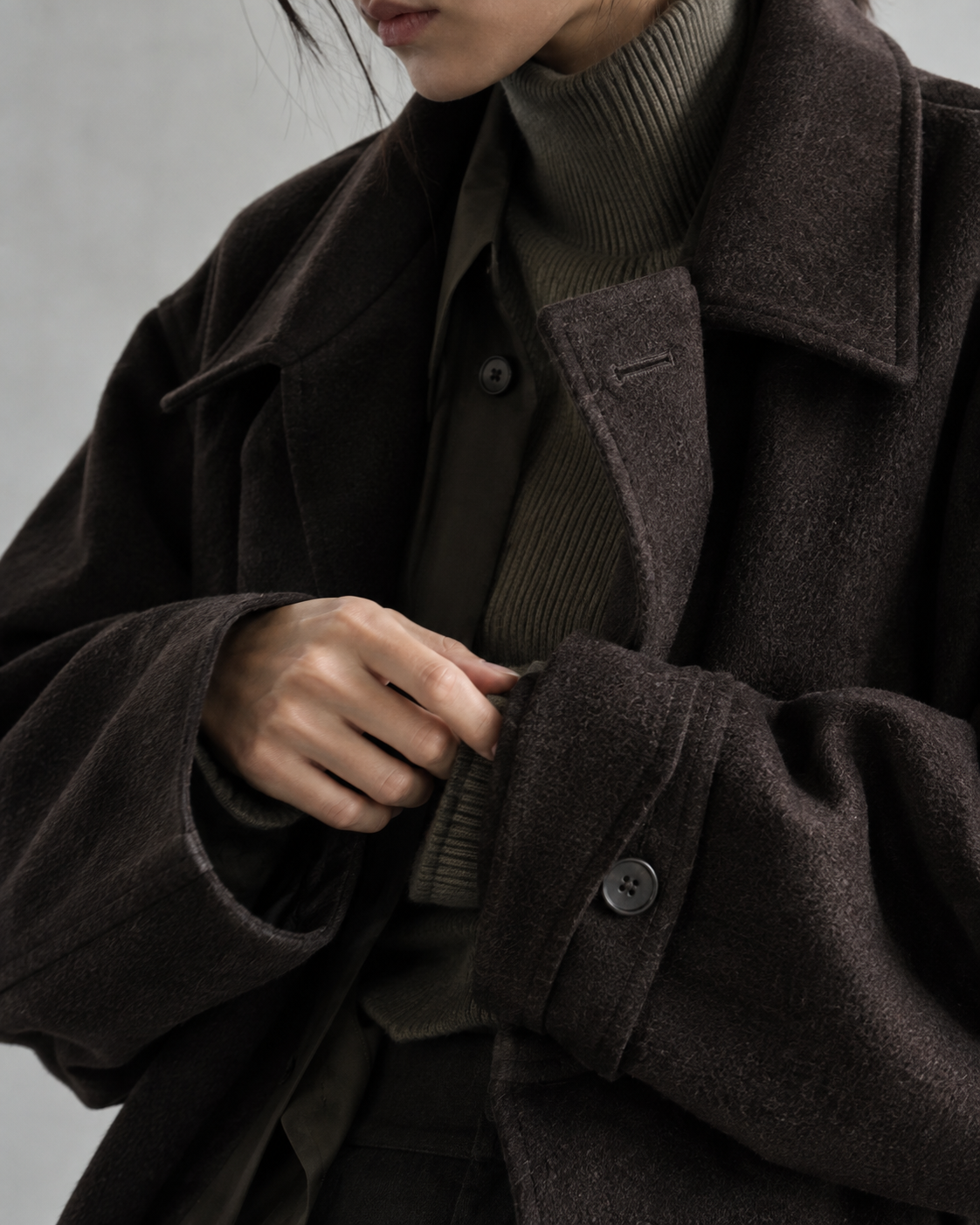
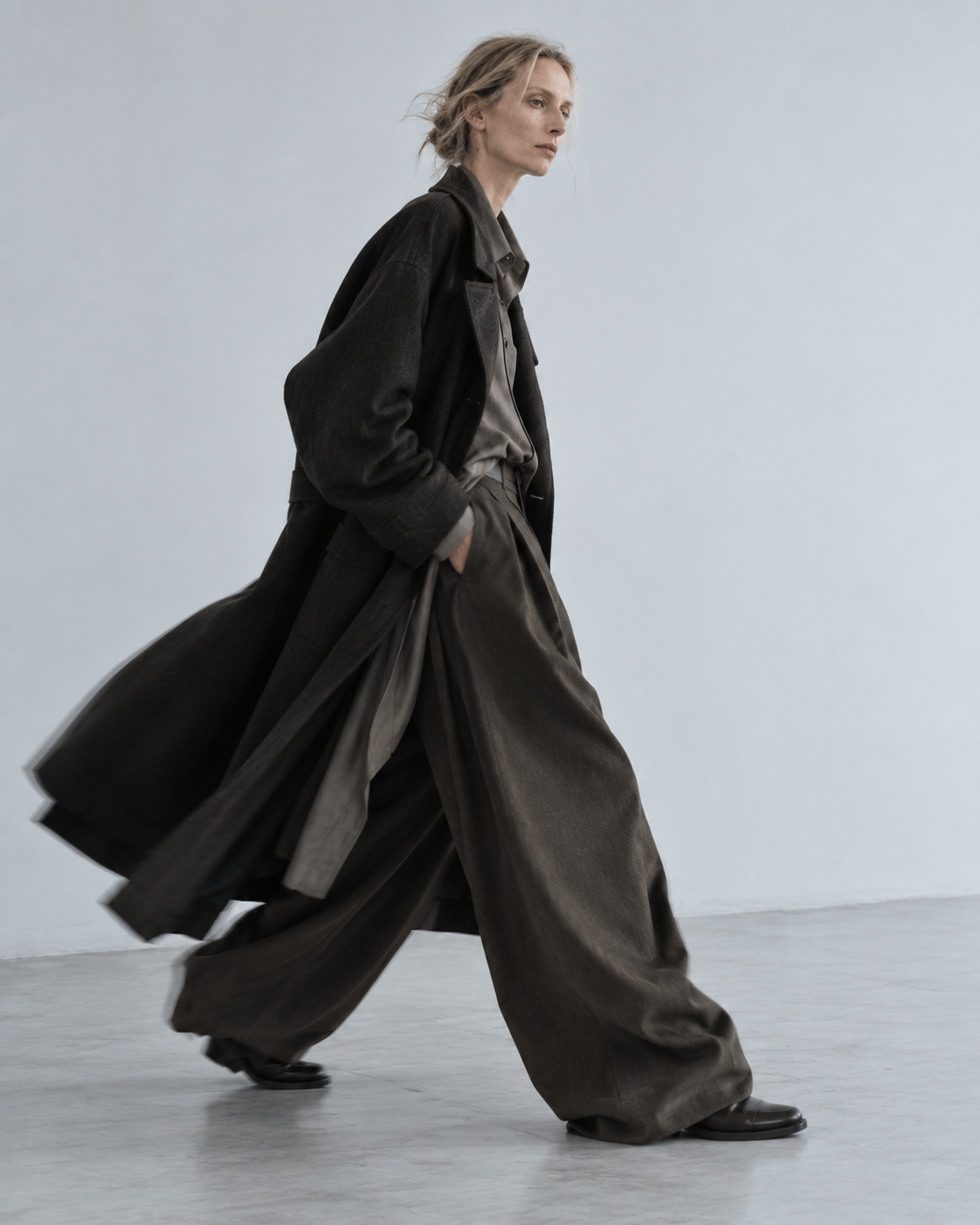

Rather than increase persuasion, we reduced the work required to understand the clothes. Ready-to-wear was reframed as a wardrobe system: showing how garments relate, move, feel and ultimately belong within a life.
Garments became a wardrobe easier to imagine inhabiting.

THE STRATEGIC FRAMEWORK
Different barriers
required different answers.
Every recommendation responded to a specific behavioural barrier identified through the research. Rather than redesigning the experience around convention, we designed it around the moments where purchase confidence was being lost.
01
WARDROBE VISUALISATION
"Customers admired individual garments but struggled to imagine complete wardrobes."
→
Build discovery around wardrobes, not products.
Restructure product discovery to show how garments relate to one another, allowing customers to imagine ownership rather than evaluate isolated pieces.
02
PURCHASE REASSURANCE
"Customers required greater reassurance before committing to high-value ready-to-wear purchases."
Reduce uncertainty before commitment.
→
Introduce styling pathways, complete-look recommendations and wardrobe-building sequences to give customers greater confidence before purchase.
03
PRODUCT UNDERSTANDING
"Movement, silhouette and craftsmanship were fundamental to the product experience but largely invisible within static digital merchandising."
Show how garments behave, not simply how they look.
→
Prioritise movement-led imagery, richer editorial storytelling and tactile product narratives that communicate how garments move, feel and relate to the body.
→
04
DIFFERENT ENTRY MOTIVATIONS
"Customers entered the brand with different motivations."
Design different paths into ready-to-wear.
→
Develop distinct communication journeys for first-time luxury buyers, wardrobe investors and accessory-led customers.
05
VALUE JUSTIFICATION
"Craftsmanship alone was not sufficiently justifying value digitally."
Move value beyond specification.
→
Reposition products around longevity, permanence and wardrobe versatility, reinforcing emotional value alongside functional detail.
the experience design
Turning behavioural strategy into the customer journey.
The digital experience needed to do more than display product. It needed to reduce the distance between seeing a garment and understanding how it could be worn.


+28%
READY-TO-WEAR CONVERSION
More customers moved from consideration to purchase across ready-to-wear.
+17%
AVERAGE ORDER VALUE
Greater confidence translated into deeper investment within each purchase.
+22%
FULL-LOOK PURCHASES
Customers increasingly purchased garments as connected wardrobes rather than isolated pieces.
COMMERCIAL VALIDATION
Did changing the experience
change behaviour?
The impact appeared not only in conversion, but in how customers purchased. Ready-to-wear converted more effectively, order value increased, and more customers moved beyond individual products to purchase complete looks.
THE COMMERCIAL SIGNAL
Customers weren't simply buying more. They were buying differently.
The increase in full-look purchasing was particularly significant: the behaviour the strategy was designed to encourage—understanding Lemaire as a wardrobe rather than a collection of isolated objects—was now appearing in the way customers purchased.
THE NEXT QUESTION
Have a brand with a different question?
What’s your story?
We work with founder-led and luxury brands where the challenge goes deeper than aesthetics—into perception, behaviour and the decisions that shape growth.

FORMA ALTA
Paris, France
HERMÈS: THE SILK NARRATIVE
NEXT PROJECT →
aidaghani@formaalta.com